

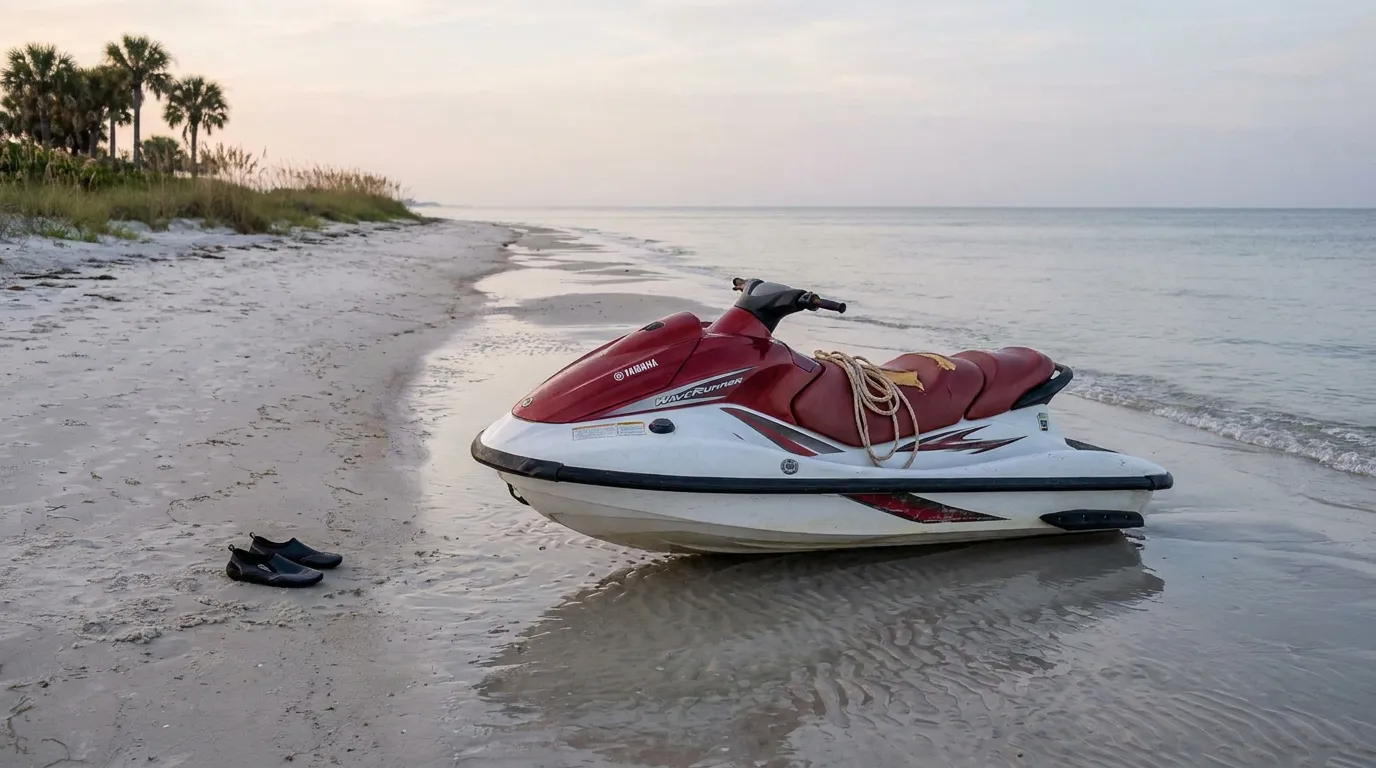
Your First Moves After a Personal Watercraft Crash
Key Takeaways: After a jet ski accident in Florida, operators generally must stop, help anyone hurt, and give their name, address, and vessel ID in writing. For rented jet skis, the rental business generally handles the reporting and render-aid duties. Get a full medical exam right away, even if you feel fine, because adrenaline can mask pain and brain injuries can be subtle. Florida law requires a written report to the Florida Fish and Wildlife Conservation Commission when a crash causes injury, death, a missing person, or at least $2,000 in damage. Statements made to complete that report generally cannot be used at trial, but chemical test results are an exception. Water erases evidence fast, so photograph the scene, record vessel and insurance details, and get witness contact information. Breaking the personal watercraft rules in Fla. Stat. § 327.39 may help prove negligence. Deadlines of two years under Florida law or three years under federal maritime law, along with shared-fault rules, can affect your recovery, so act promptly.
After a jet ski accident in Florida, your first priorities are safety, medical care, reporting, and careful records. Florida law gives vessel operators specific duties after a collision, and those rules may also help injured riders show who was at fault. Whether a careless rider hit you on the Manatee River or you were hurt on a rented jet ski near Anna Maria Island, what you do in the first hours and days can affect your health and any later claim.
If someone else’s negligence hurt you or a loved one, you do not have to handle this alone. Phillips, Hayden & Labbee, LLP works with injured boaters and their families throughout the Bradenton area. Call 727-300-1399 or reach out to our team today to talk through your options.
Step One: Get Help and Trade Information
Florida law generally requires every operator involved in a collision to stop and help. Under Fla. Stat. § 327.30(1), any vessel operator involved in a collision must give needed help to those affected, as long as doing so does not seriously endanger their own vessel, crew, or passengers. The operator must also give their name, address, and vessel ID in writing to anyone hurt and to the owner of any damaged property.
This duty matters to victims. Written ID from the other operator gives you a starting point for an insurance claim. If the operator leaves without helping or identifying themselves, that may be useful evidence later and may carry separate criminal penalties.
Special Rules for Rented Jet Skis
Rentals change who carries certain legal duties. Under Fla. Stat. § 327.301(6), if a vessel was leased, rented, or chartered at the time of the accident, the business that rented it out generally must meet the reporting and render-aid duties. Many Gulf Coast jet ski crashes involve tourists on rented machines, so this rule comes up often. Even so, a renter on scene should still help injured people when it is safe.
Step Two: Get Medical Care Right Away
Get a full medical exam even if you feel fine. Jet ski collisions often throw riders into the water or against handlebars and hulls at high speed. Adrenaline can hide pain, and some injuries take hours or days to show up.
Brain injuries are a special concern. Mayo Clinic researchers report that traumatic brain injuries (TBI) are likely more common than once thought, and that standard imaging and symptom checklists may miss milder TBI. Tell your doctor exactly how the crash happened, including any blow to the head or loss of consciousness.
💡 Pro Tip: Keep a daily symptom journal for the first few weeks. Write down headaches, dizziness, memory lapses, mood changes, or trouble sleeping. These notes can support your claim later.
Step Three: Report the Accident Properly
Many jet ski crashes must be reported in writing. Under Fla. Stat. § 327.301(1), an operator involved in an accident that causes bodily injury, death, a missing person, or damage of at least $2,000 must send a written report to the Florida Fish and Wildlife Conservation Commission’s division within the time limits in 33 C.F.R. § 173.55. Those limits are generally 48 hours for deaths, disappearances, or injuries needing more than first aid, and 10 days for other reportable accidents. If the operator cannot report, the owner must. No operator report is needed if an investigating officer has already filed one.
Failing to report has consequences. Under Fla. Stat. § 327.301(7), failing to file a required report is a noncriminal infraction, separate from any civil lawsuit for your injuries.
What Police Reports Must Include
If an officer investigates, you may get a short-form report. Under Fla. Stat. § 327.301(3), an investigating officer must send a written report to the division within 24 hours after finishing the investigation. If the officer does not write a full report, they must give each party a short-form report listing the date, time, and location; a description of the vessels; the names and addresses of parties and witnesses; and the officer’s name, badge number, and agency.
How Report Statements Can and Cannot Be Used
Your own report statements are generally protected. Under Fla. Stat. § 327.301(4), an accident report made by a person involved, and statements that person gives an officer to complete the report, are without prejudice to the person reporting. They generally cannot be used as evidence in a civil or criminal trial. That protection does not necessarily cover statements made during a separate criminal investigation, an officer’s own observations, or what witnesses say. One key exception: breath, urine, and blood test results under Fla. Stat. §§ 327.352 and 327.353 are not confidential and may be admitted under Fla. Stat. § 327.354, which can matter if the other operator was impaired.
Step Four: Document the Scene and Find Witnesses
Documenting a jet ski accident is harder than documenting a car crash because water erases evidence fast. Waves, currents, and moving vessels can change the scene in minutes. If you are able, or if a companion can help, gather the following:
- Photos and video of the watercraft, damage, injuries, and water conditions
- Hull ID or registration numbers for every vessel involved
- Names, phone numbers, and addresses of witnesses on shore or other boats
- Insurance company names and policy numbers, if available
- Rental agreements, receipts, and any safety briefing paperwork
💡 Pro Tip: Witnesses on beaches and docks are often vacationers who leave within days. Get their contact information before they go.
Proving Fault in a Jet Ski Accident: Florida Rules That Matter
Florida’s personal watercraft laws may provide evidence of negligence, depending on the facts. Chapter 327 of the Florida Statutes sets the safety rules for vessels, and Fla. Stat. § 327.39 covers personal watercraft specifically. When an operator breaks these rules and someone gets hurt, courts may treat the violation as evidence of failure to use reasonable care. You must still show that the violation caused the injury.
| Florida Rule | Statute | Why It Matters for Victims |
|---|---|---|
| Everyone aboard or towed must wear a USCG-approved non-inflatable life jacket | § 327.39(1) | Shows whether safety rules were followed |
| Operator must attach the engine cutoff lanyard if equipped | § 327.39(2) | A missing lanyard may help explain runaway crashes |
| No riding from one-half hour after sunset to one-half hour before sunrise | § 327.39(3) | Nighttime riding may show negligence |
| No operator under age 14 | § 327.39(5) | Underage riding may point to owners or renters |
| Weaving through traffic, jumping wakes too close, or last-second swerving counts as reckless operation | § 327.39(4) | These moves are listed as reckless under § 327.33(1) |
| Rental owners may not knowingly let anyone ride without safe-handling instruction | § 327.39(6) | May carry criminal penalties and serve as evidence against a rental business |
More than one party may share fault. A careless rider, a rental company that skipped required instruction, or a maker whose faulty throttle or steering failed could each share blame. Each negligence claim requires proof of duty, breach, causation, and damages.
Deadlines and Shared Fault Can Affect Your Recovery
Time limits apply to injury claims, and they vary. Under Fla. Stat. § 95.11, many Florida negligence claims arising after March 24, 2023, must generally be filed within two years. But accidents on navigable waters may fall under federal maritime law, where 46 U.S.C. § 30106 generally allows three years, even in state court. Which rule applies depends on where and how the accident happened.
Your own conduct can reduce what you recover. Under Florida’s modified comparative negligence rule in Fla. Stat. § 768.81, a person found more than 50% at fault generally cannot recover damages in many negligence cases. A person found 50% or less at fault generally has damages cut by their share of fault. Maritime law uses pure comparative fault instead, which cuts damages but does not bar recovery. Insurers often try to shift blame onto injured riders, so careful evidence matters.
Frequently Asked Questions
1. Do I have to report a minor jet ski collision?
Fla. Stat. § 327.301(1) requires a written report when an accident causes injury, death, a missing person, or at least $2,000 in damage. Jet ski repairs often cost more than people expect, so even a "minor" crash may meet that threshold.
2. Can the rental company be responsible for my injuries?
It may be, depending on the facts. Rental businesses have reporting and render-aid duties under Fla. Stat. § 327.301(6), and under § 327.39(6) they may not knowingly let anyone ride without safe-handling instruction. Liability still depends on proving fault and causation.
3. Will my statement to the officer be used against me?
Generally, no. Fla. Stat. § 327.301(4) protects statements made to complete a required accident report. Chemical test results are an exception, and statements made during a separate criminal investigation may not be protected.
4. What if I was a passenger on the jet ski?
Passengers may have claims against their own operator, another operator, or both, depending on who caused the crash and which law applies.
5. Should I wait to see a doctor if I feel okay?
No. Brain and internal injuries can be subtle at first, and an early medical record can help link your injuries to the crash.
Protecting Your Health and Your Rights
After a jet ski accident in Florida, help others, get medical care, report the crash, and save evidence. Florida’s personal watercraft rules may help show fault, but deadlines, shared-fault arguments, and federal maritime law can complicate any claim. Acting promptly may help you keep your options open.
Talk with a Bradenton team that represents injured boaters, not insurance companies. Contact Phillips, Hayden & Labbee, LLP at 727-300-1399 to speak with a Florida jet ski injury lawyer about what happened and what steps may fit your situation.
Disclaimer: This content is for informational purposes only and is not legal advice. Every case is unique, and results may vary. Consult an attorney about your specific circumstances.