

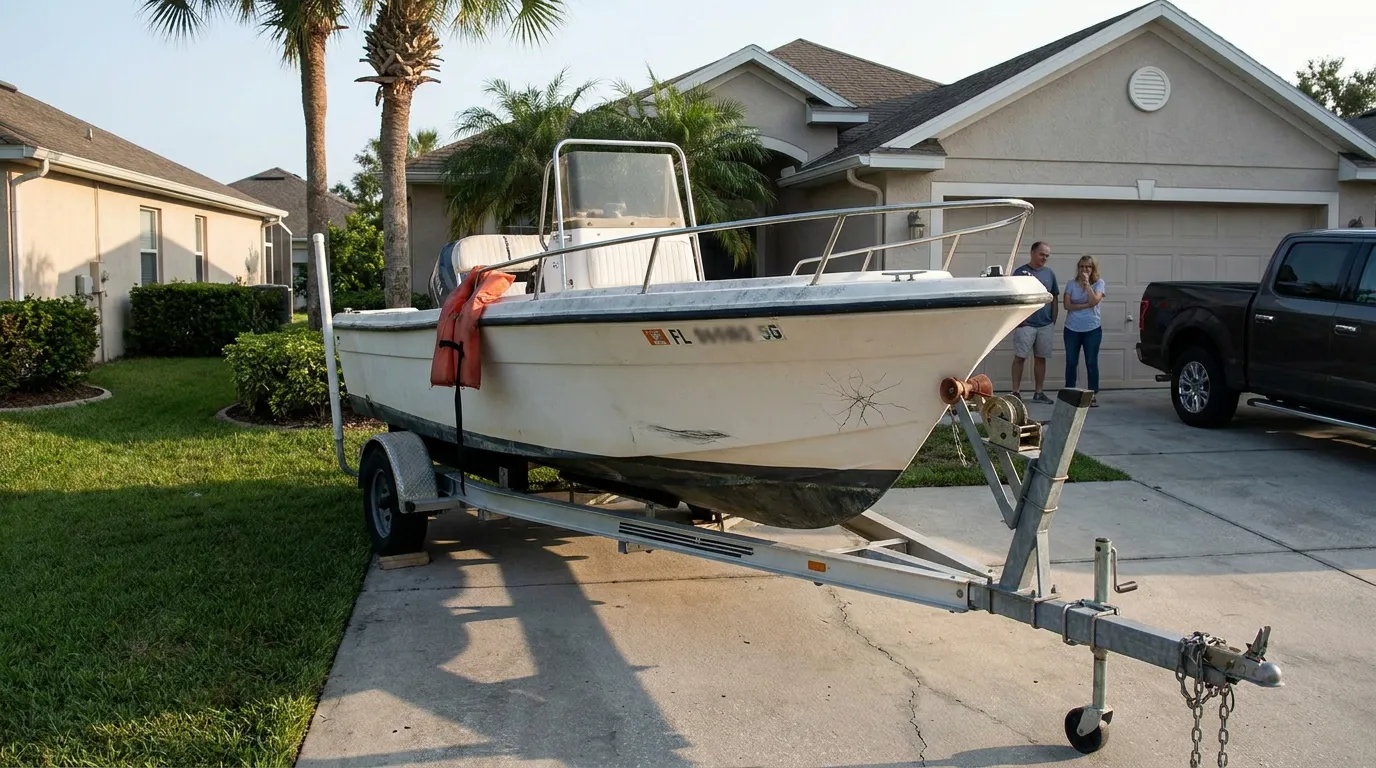
When a Boater Hits and Stays Silent on Florida Waters
Key Takeaways: If the at-fault boater never reports the accident in Florida, they may face criminal penalties ranging from a second-degree misdemeanor to a first-degree felony, but you generally keep your right to file a civil injury claim. Under Fla. Stat. §§ 327.30 and 327.301, operators must stop, give aid, share identifying information, and notify authorities in serious cases. They must also file a written report for injuries, deaths, disappearances, or damage of $2,000 or more, unless an investigating officer has already filed one. Statements made for the required report are generally privileged and can’t be used at trial, so strong claims usually rely on independent evidence such as witness testimony, photos, video, GPS data, and medical records. Victims can protect their cases by reporting the accident, getting medical care, writing down vessel details, and saving witness contacts and footage. When a rented vessel is involved, the rental or charter business is responsible for certain reporting duties. Filing deadlines still apply: generally two years under Florida law or three years under federal maritime law for many negligence claims, so talk with a lawyer early.
If the at-fault boater never reports the accident, you may still have options. Florida law generally requires a boat operator involved in a collision or other casualty to stop, help the people affected, share identifying information, and notify authorities in serious cases. An operator who ignores these duties may face criminal penalties, but that failure generally does not erase the injured person’s right to pursue a civil claim. Independent evidence, witness accounts, and your own report can often fill the gaps.
If you or someone you love was hurt on the water near Bradenton and the responsible boater went silent, Phillips, Hayden & Labbee, LLP can review what happened and explain your options. Call 727-300-1399 or contact us now to discuss your situation. Our team works with injured boaters and families across the Manatee County area.
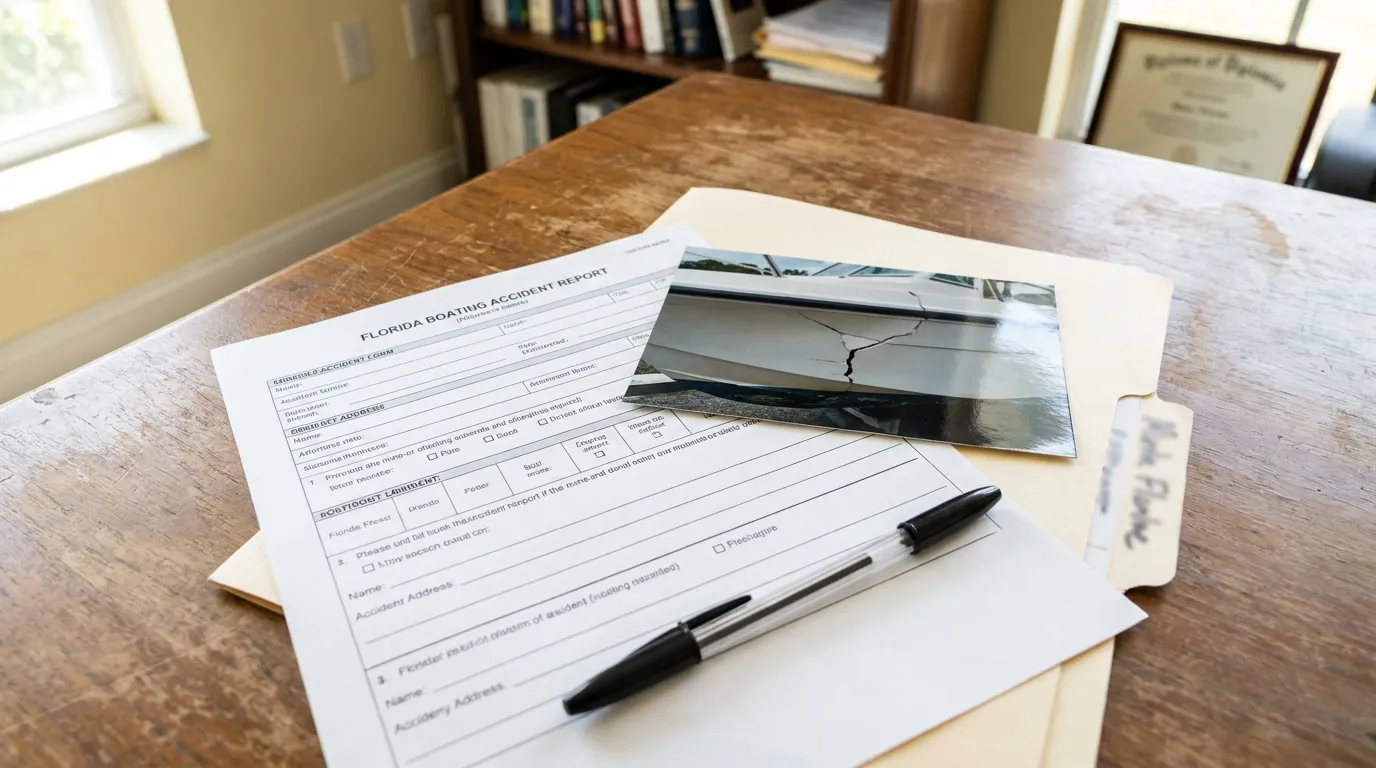
What Florida Boating Accident Reporting Requirements Demand of Operators
Florida boating accident reporting requirements begin the moment a collision or casualty happens. Under Fla. Stat. § 327.30(1), an operator involved in a collision, accident, or other casualty must give practical and needed help to the people affected, as long as they can do so without serious danger to their own vessel, crew, and passengers. The operator must also give their name, address, and vessel identification in writing to anyone injured and to the owner of any damaged property.
Immediate Notice to Law Enforcement
Certain accidents require the operator to notify authorities right away. Under Fla. Stat. § 327.30(2), the operator must give notice by the quickest means available when the accident involves any of the following:
- Capsizing, sinking, or collision with another vessel or object
- Injury requiring medical treatment beyond immediate first aid
- Death, or disappearance of a person under circumstances suggesting possible death or injury
- Damage to vessels or other property totaling at least $2,000
The operator may notify the Florida Fish and Wildlife Conservation Commission (FWC) Division of Law Enforcement, the sheriff of the county where the accident happened, or the city police chief if it happened within city limits. In unincorporated Manatee County waters, that would generally be the Manatee County Sheriff.
The Written Accident Report
A written report is a separate duty from the immediate notice. Fla. Stat. § 327.301(1) requires a written report for any accident causing bodily injury, death, disappearance of a person, or at least $2,000 in total damage. The operator must send it within the time limits set by 33 C.F.R. § 173.55. If the operator is physically unable to report, the vessel owner must. The operator generally need not file if an investigating officer has already filed a written report.
Rental and charter businesses carry these duties too. Under Fla. Stat. § 327.301(6), if the vessel was leased, rented, or chartered at the time of the accident, the business that offered it is responsible for the reporting and duty-to-assist requirements. This can matter when a tourist on a rented boat or Jet Ski causes a crash and then leaves the area.
Criminal Consequences for an At-Fault Boater Who Leaves
Leaving the scene of a boating accident can be a crime in Florida. Fla. Stat. § 327.30(5) makes it unlawful for an operator to willfully leave the scene without giving all possible aid, making a reasonable effort to find the affected people, and notifying law enforcement. You can review the full text of Florida’s boating accident statute to see how the penalties increase with the harm caused.
| Harm Caused | Classification Under Fla. Stat. § 327.30(5) |
|---|---|
| Property damage only | Second-degree misdemeanor |
| Injury other than serious bodily injury | Third-degree felony |
| Serious bodily injury | Second-degree felony |
| Death of a person or unborn child | First-degree felony |
A willful violation that results in a death carries a mandatory minimum of 4 years in prison. Prosecutors decide whether to file charges, and the injured person does not control that decision. A criminal case and a civil injury claim are separate. Compensation generally comes through the civil process, while court-ordered restitution may cover only some losses.
How a Failure to Report a Boating Accident Affects Your Injury Claim
A failure to report a boating accident does not by itself defeat a victim’s civil claim. The at-fault boater’s legal duty to act carefully on the water generally exists whether or not anyone files paperwork. To recover compensation, an injured person generally must show duty, breach, causation, and damages. Missing reports can make those elements harder to prove, but rarely impossible.
Why the Report Itself May Not Be Evidence
Many people assume the official report will prove fault, but Florida law limits its use. Under Fla. Stat. § 327.301(4), reports and statements made for the required accident report are privileged and generally cannot be used as evidence in any civil or criminal trial. Breath, urine, and blood test results are not confidential and may be admissible under Fla. Stat. § 327.354.
In practice, a strong claim usually rests on independent evidence. Witness testimony, photos, video, GPS data, vessel damage records, and medical records often carry the most weight.
You and Witnesses Can Help Build the Record
The state can require more information when a report falls short. Under Fla. Stat. § 327.301(2), the division may require the operator to file supplemental reports if the original is insufficient, and may require any witness to submit a report. Under Fla. Stat. § 327.301(3), an investigating officer who completes a written report must send it to the division within 24 hours after finishing the investigation. If the officer does not prepare one, the officer must give each party a short-form report listing the date, time, location, vessels, parties, witnesses, and the officer’s name, badge number, and agency.
💡 Pro Tip: If an officer hands you a short-form report, keep a copy and photograph it right away. The officer’s name, badge number, and agency can help your legal team find the investigation file later.
Practical Steps After an Unreported Boating Accident in Florida
Acting quickly can preserve evidence that disappears fast on the water. Boats get repaired, witnesses go home, and memories fade. Consider these steps when the other operator has not come forward:
- Report the accident yourself to FWC or the Manatee County Sheriff.
- Get medical care and keep every record and bill.
- Write down the vessel’s description, registration numbers, and direction of travel.
- Collect names and phone numbers of other boaters, passengers, and marina staff.
- Save photos, videos, and any marina or dock security footage.
Identifying a boater who fled can be one of the hardest parts of a case. Registration numbers, marina rental logs, and nearby camera footage may help investigators find the operator. If a rental business was involved, its records may show who was driving.
Deadlines and Legal Issues to Watch
Civil injury claims have filing deadlines that can bar recovery if missed. Under Florida’s statute of limitations chapter, Fla. Stat. § 95.11 generally sets a two-year deadline for negligence claims that arise after March 24, 2023. Wrongful death claims also generally have a two-year deadline. Some claims on navigable waters may fall under federal maritime law, where 46 U.S.C. § 30106 generally allows three years. Which law applies depends on the facts, including where the accident happened and the type of vessel.
Don’t assume you’ll get more time. Courts generally read exceptions to filing deadlines narrowly, and a boater’s failure to report does not automatically extend your deadline. Claims against government entities may also involve separate notice rules. You can learn more on our boating accident blog, but it cannot replace advice tailored to your facts.
💡 Pro Tip: Do not wait until the at-fault operator is identified to talk with a lawyer. Investigation time counts against your deadline.
Frequently Asked Questions
1. Is it illegal for a boater to leave without reporting an accident in Florida?
Yes, in certain cases. Fla. Stat. § 327.30(5) makes it unlawful to willfully leave without giving aid, making a reasonable effort to find those affected, and notifying law enforcement. Penalties range from a second-degree misdemeanor to a first-degree felony, depending on the harm caused.
2. Can I still file a claim if no accident report exists?
In many cases, yes. Your claim generally depends on proving negligence and damages, not on whether the other boater filed a report. Independent evidence often matters more because Fla. Stat. § 327.301(4) generally makes report statements privileged.
3. Should I report the accident myself?
Generally, yes. Your own report helps create an official record. Fla. Stat. § 327.301(2) also allows the state to require reports from witnesses.
4. Who is responsible if the at-fault boater rented the vessel?
Under Fla. Stat. § 327.301(6), the rental or charter business is responsible for the reporting and duty-to-assist requirements. Whether it is also liable in a civil case depends on the facts.
5. How long do I have to file a lawsuit?
Many Florida negligence claims generally must be filed within two years under Fla. Stat. § 95.11. Federal maritime claims may have a three-year period under 46 U.S.C. § 30106. The correct deadline depends on your situation.
Protecting Your Rights When the Other Boater Goes Silent
An at-fault boater’s silence may expose them to criminal charges, but it generally does not erase your right to seek compensation. When an operator ignores Florida boating accident reporting requirements, injured people may still build a strong claim through witness accounts, physical evidence, and their own reports. Acting early can help protect both evidence and filing deadlines.
If an operator ignored Florida boating accident reporting requirements and left you injured, Phillips, Hayden & Labbee, LLP is ready to listen. Speak with a Florida boating accident reporting requirements lawyer on our team about your next steps. Call 727-300-1399 today.
Disclaimer: This content is for informational purposes only and is not legal advice. Every case is unique, and results may vary. Consult an attorney about your specific circumstances.